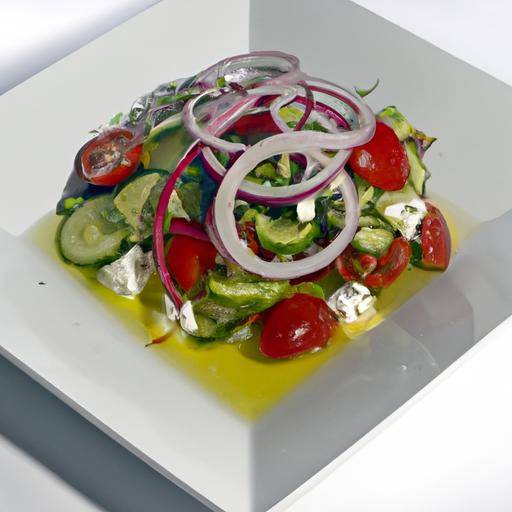


beneath the golden sun and amidst the olive groves of Greece lies a culinary treasure that has captured hearts-and palates-around the world: the Greek salad. But what truly defines this iconic dish beyond its vibrant colors and simple ingredients? To unlock the authentic Greek salad is to embark on a sensory journey through time and tradition, where each crisp cucumber slice, sun-ripened tomato, and briny olive tells a story of the MediterraneanS rich heritage. In this article,we peel back the layers of myths and modern twists to reveal the true taste of Greece-one that honors purity,balance,and the joyful spirit of the Aegean table. Prepare to rediscover a salad that is far more than a side; it’s a celebration of Greek culture in every bite.
The True Taste of Greece: Unlocking Authentic Greek salad invites food enthusiasts to rediscover a classic Mediterranean treasure that is as vibrant in history as it is refreshing on the palate.This iconic salad is rooted in the sun-soaked landscapes and rich traditions of Greece, where simple, pristine ingredients unite to celebrate the bounty of the land and sea.
Originating in the islands and countryside, Greek salad represents more than nourishment – it’s a cultural emblem of balance, community, and timeless hospitality. The crispness of locally grown cucumbers, the robust aroma of freshly picked oregano, and the creamy tang of feta all converge to tell a story of Mediterranean life. With each bite, you’re invited into the heart of Greek culinary heritage, vibrant with colors and bursting with authentic flavor.
Prep and Cook Time
Preparation: 15 minutes
Cooking: None required
Total time: 15 minutes
Yield
Serves 4 as a refreshing side or light main dish
Difficulty Level
Easy – Perfect for cooks of all levels eager to savor genuine Mediterranean flavors
Ingredients
- 3 large ripe tomatoes, cut into wedges
- 1 English cucumber, peeled, seeded, and sliced into thick half-moons
- 1 green bell pepper, thinly sliced
- 1 small red onion, thinly sliced into rings
- 200g block of authentic Greek feta cheese, cut into large cubes or crumbled
- Handful of Kalamata olives, pitted
- 2 tbsp extra virgin olive oil
- 1 tbsp fresh lemon juice, preferably freshly squeezed
- 1 tsp dried oregano, preferably Greek oregano
- Sea salt and freshly cracked black pepper, to taste
Instructions
- Prepare the vegetables: rinse the tomatoes, cucumber, and pepper under cold water.Cut the tomatoes into sizable wedges to retain their juicy texture and vibrant color.
- Slice the cucumber: Peel and seed the cucumber before slicing it into thick half-moon shapes to add textural contrast to the salad.
- Thinly slice the onion and bell pepper: Use a sharp knife to create delicate rings of red onion and slender strips of green bell pepper that will blend beautifully with the other ingredients.
- assemble the salad: In a large bowl or rustic serving dish,gently combine the tomatoes,cucumber,green bell pepper,and red onion without bruising the produce.
- Add the Kalamata olives: Scatter the pitted olives over the salad, their salty bite providing a perfect counterpoint to the sweeter vegetables.
- Dress the salad: Drizzle extra virgin olive oil and freshly squeezed lemon juice evenly across the salad while tossing gently to coat all ingredients. Sprinkle with dried oregano, sea salt, and cracked black pepper to finish.
- Top with feta cheese: Place generous cubes or crumbled feta on top-its creamy, tangy depth is the final jewel in this mosaic of flavors.
- Serve immediately: Greek salad is best enjoyed fresh for that crisp, vibrant bite, maintaining its authentic Mediterranean essence.
Chef’s Notes
- For the most authentic flavor, source high-quality Kalamata olives and Greek feta from specialty stores or online retailers.
- If you prefer a milder onion flavor, soak the sliced red onions in cold water for 10 minutes before draining and adding to the salad.
- Make dressing just before serving to preserve the luminous citrus notes and fresh herbal aroma of the oregano.
- Substitute fresh oregano for dried if available; use roughly three times the amount since fresh herbs are less concentrated.
- Greek salad can be made an hour ahead without dressing to maintain freshness-add dressing shortly before serving.
serving Suggestions
This salad shines as a centerpiece alongside grilled fish or roasted vegetables. Garnish with a sprig of fresh oregano or a sprinkle of chopped fresh parsley for flair. Serve with warm pita bread or crusty bread to soak up the vibrant dressing. For an authentic touch, pair with chilled Greek iced tea or a sparkling water infused with lemon and mint.
| Nutrition | Per Serving |
|---|---|
| calories | 210 kcal |
| Protein | 6 g |
| Carbohydrates | 9 g |
| Fat | 18 g |


To dive deeper into Mediterranean flavors, explore our detailed guide on the health benefits of the Mediterranean diet. For a broader cultural insight, the Encyclopaedia Britannica’s article on Greek salad offers a rich past viewpoint.
Q&A
Q&A: The True Taste of Greece – Unlocking Authentic Greek Salad
Q1: What makes a Greek salad genuinely authentic?
A1: Authentic Greek salad is all about simplicity and quality. It’s a fresh, vibrant combination of ripe tomatoes, crisp cucumbers, sweet red onions, tangy Kalamata olives, and creamy, thick slabs of feta cheese. The dressing is minimal-just extra virgin olive oil, a splash of red wine vinegar or lemon juice, and a sprinkle of dried oregano. No lettuce or exotic vegetables-just pure, honest ingredients celebrating the Mediterranean sun.
Q2: Why is the choice of olive oil so vital?
A2: Olive oil is the heart and soul of a true Greek salad dressing. The best choice is a robust, peppery extra virgin olive oil that bursts with fruity, grassy notes. It elevates the salad, balancing the acidity of vinegar and the saltiness of feta and olives. Using premium olive oil turns a simple salad into a sensory journey reminiscent of the olive groves in the Greek countryside.
Q3: How shoudl the vegetables be prepared to preserve their authentic flavor?
A3: Preparation is key to honoring each ingredient’s natural taste and texture. Tomatoes should be juicy and cut into hearty wedges, cucumbers sliced thickly to maintain crunch, and onions thinly sliced to offer a mild bite without overpowering. Each element should stand out yet harmonize, offering contrasting textures and freshness with every bite.
Q4: Can the feta cheese be substituted without losing authenticity?
A4: Feta is a signature element-crumbly or in thick slabs, briny and tangy, it’s the creamy contrast that defines Greek salad. While some might suggest alternatives, nothing quite replicates authentic Greek feta made from sheep’s or goat’s milk.Using genuine feta anchors the salad in its homeland’s rich culinary tradition.
Q5: Is there a conventional way to serve Greek salad?
A5: traditionally, Greek salad is served as a mezze or side dish alongside grilled vegetables, fresh bread, or main meals.It’s meant to be rustic and unpretentious, often dressed tableside and eaten at room temperature. Presenting the salad on a simple ceramic plate or bowl honors the rustic Greek ethos – the food speaks for itself.Q6: Why shouldn’t lettuce be included in an authentic Greek salad?
A6: Lettuce is a common ingredient in many international adaptations but is absent in the classic Greek salad, or “horiatiki.” the salad relies on the hearty textures and strong flavors of its core vegetables and cheese rather than the mildness and excess moisture lettuce adds. Each ingredient should shine on its own, creating a balanced overall bite without dilute crunch.
Q7: What herbs truly capture the essence of Greek salad?
A7: Dried oregano is the quintessential herb in Greek salad, sprinkling a warm, slightly bitter note that complements the rich feta and bright tomatoes. Sometimes, a touch of fresh mint or parsley can be added, but oregano’s rustic aroma remains the symbolic soul of the dish, evocative of sun-soaked hillsides in the Mediterranean.Q8: how does the authentic Greek salad reflect the culture and lifestyle of greece?
A8: Greek salad embodies simplicity, freshness, and a connection to the land-core values in greek culture. It celebrates seasonal, local ingredients, encouraging communal dining and appreciation of natural flavors. Eating this salad is a daily ritual in Greece, a tribute to sun, soil, and sea, and a reminder that tasty food doesn’t need to be intricate.
Unlocking the true taste of Greece through an authentic Greek salad means embracing the genuine, unpretentious harmony of its ingredients-a timeless dish that captures the Mediterranean spirit with every forkful.
Key Takeaways
As you close this culinary journey through the vibrant world of the authentic Greek salad, remember that each crisp olive, sun-ripened tomato, and crumbly feta piece tells a story rooted deep in Greece’s rich traditions. Unlocking the true taste of Greece means embracing simplicity, freshness, and a harmony of flavors that have been perfected over centuries. So next time you prepare this humble yet iconic dish, let it transport you to sun-drenched Mediterranean coasts, where every bite is a celebration of heritage and heart. Authentic Greek salad is more than a recipe-it’s a timeless experience waiting to be savored. Opa!